


What is a steel structure platform
You see steel structure platforms in factories, warehouses, and plants. These platforms help you support heavy machinery and create safe workspaces. Qingdao Xinguangzheng Steel Structure Co., Ltd. leads the industry with strong designs that meet the needs of mining, chemical, and petrochemical projects. Safety and compliance matter. Look at the standards in the table below:
Safety Consideration | Compliance Standard |
|---|---|
Fall risks | OSHA standards |
Guard systems | IBC standards |
Access routes | Safety design norms |
The global market for hot rolling structural steel reached USD 45 Billion in 2024. You will see this number grow as industries demand more reliable steel structure solutions.
Key Takeaways
Steel platforms support heavy machinery and create safe workspaces.
Prefabricated parts make assembly fast and reduce downtime.
Steel platforms are adaptable and can be modified for changing needs.
Modular designs allow easy installation and customization.
Steel platforms offer long-term durability with minimal maintenance.
Steel Structure Platform Uses
Industrial Applications
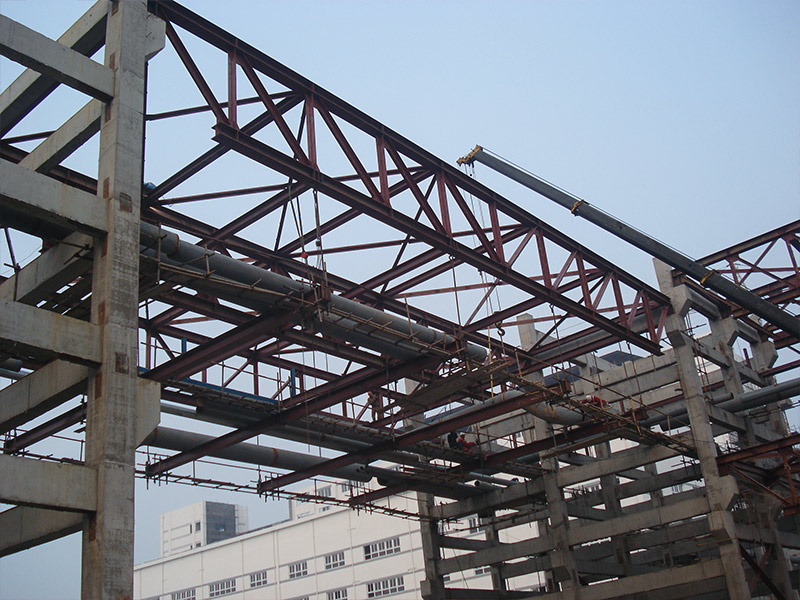
You see steel structure platforms in many industrial settings. These platforms help you reach equipment, move materials, and keep your workspace safe. Many industries use them, including manufacturing, warehousing, utilities, aviation, and food processing. Each sector has its own needs. The table below shows some examples:
Industrial Sector | Specific Requirements |
|---|---|
Manufacturing | Assembly lines and machinery access |
Warehousing | Loading and storage operations |
Utilities | Servicing elevated systems or piping |
Aviation | Maintenance on aircraft fuselages and engines |
Food Processing | Clean, elevated access to production equipment |
You can rely on steel structure platforms to support heavy loads. For example, Qingdao Xinguangzheng Steel Structure Co., Ltd. designs platforms that hold up to 8.0t/m². These platforms do not just hold weight. They also help you work faster and safer. You can change the layout to fit new machines or processes. You can also install them quickly because the parts come ready to assemble. This means less downtime for your business.
You can adapt steel platforms to fit your needs.
You can modify them if your production changes.
Prefabricated parts make assembly fast.
Bolted connections and modular designs speed up installation.
These platforms last a long time and need little maintenance.
Steel is recyclable, so you help the environment when you use it.
Commercial and Storage Solutions
You find steel structure platforms in warehouses, retail stores, and storage facilities. These platforms help you use space better and keep things organized. The table below shows common uses:
Application Type | Example Use Case |
|---|---|
Storage | Warehouse steel platforms for inventory |
Maintenance | Steel platform for maintenance access |
Walkways | Safe paths above machinery |
Mezzanine | Mezzanine steel platform for extra space |
Steel platforms let you build up, not out. You can double or triple your storage by adding levels. You keep your workflow smooth because you can design the layout for easy access. If your needs change, you can expand or move the platform without much trouble.
Tip: In retail spaces, you can use steel platforms to display products and make them easy for customers to reach. This helps you serve more people and keep your store neat.
Specialized Environments
Some places need special steel structure platforms. Mining, chemical, and petrochemical projects have harsh conditions. You need platforms that resist corrosion, chemicals, and extreme heat. Qingdao Xinguangzheng Steel Structure Co., Ltd. uses advanced coatings to protect steel in these tough spots. This keeps your platform strong and safe for many years.
You need advanced coatings for corrosive environments.
These coatings protect against chemicals and high temperatures.
Strong coatings mean less downtime and lower maintenance costs.
Safety platforms and walkways are vital in high-risk areas.
Lightweight designs use high-strength alloys for easy handling.
Corrosion resistance keeps your structure safe and reliable.
Steel structure platforms work well in hazardous places. They have a high strength-to-weight ratio, so you get strong support without extra bulk. They resist fire, pests, and mold. You can use them for heavy equipment, tanks, and pressure vessels. With the right design, you can trust your platform to last in any environment.
Steel Structure Platform Types
Mezzanine Platforms
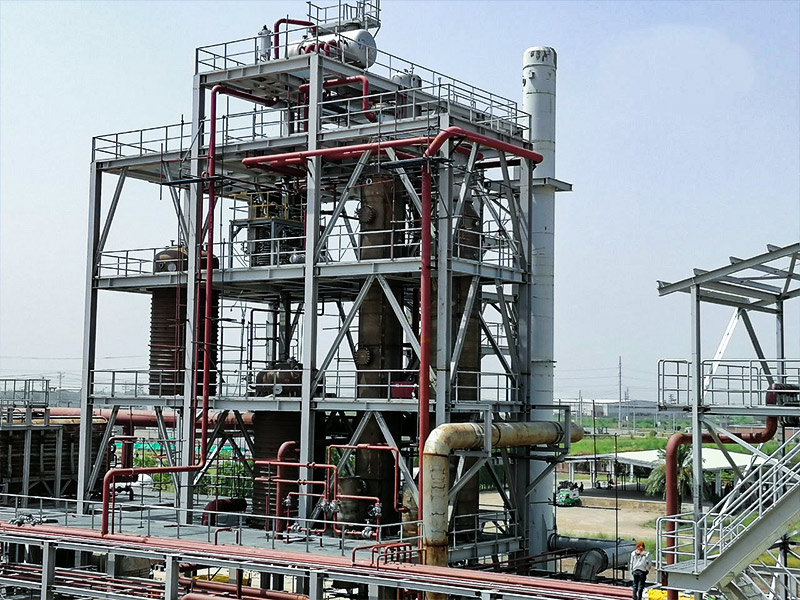
You can use mezzanine platforms to create extra space inside your building. These platforms stand on their own and form an intermediate floor between the ground and the ceiling. Mezzanine platforms help you add more storage or work areas without changing your building’s footprint.
Here are some ways different industries use mezzanine platforms:
Industry | Purpose | Applications |
|---|---|---|
Warehousing and Logistics | Increase storage capacity without expanding the building footprint. | Additional storage for slow-moving goods, space for labeling, packing, or sorting operations. |
Manufacturing | Maximize floor space for machinery and assembly lines. | Housing light machinery, creating workspaces for quality control or assembly tasks. |
Retail | Enhance the shopping experience by adding display or storage areas. | Adding a mezzanine for premium product displays, storage of excess stock above retail areas. |
Automotive Industry | Optimize space in service centers, showrooms, or workshops. | Storing tools, parts, or equipment, housing customer waiting areas above repair bays. |
Food and Beverage | Comply with health regulations while maximizing operational efficiency. | Storage of dry ingredients, adding office space overlooking production lines. |
You can see that mezzanine platforms give you flexibility and help you use your space better.
Multi-Tier Platforms
Multi-tier platforms let you build up, not out. You can stack several levels to make the most of your vertical space. This type of steel structure works well in large warehouses and logistics centers. You can store more items in the same area and use automated systems to move goods between levels.
Multi-tier platforms help you organize your storage and improve workflow.
You can add elevators, stairs, or conveyors for easy movement between levels.
These platforms need careful planning for safety, fire protection, and strong foundations.
Note: Multi-tier platforms are popular in modern warehouses where you need to handle lots of products quickly and safely.
Modular Designs
Modular designs make your steel structure platform easy to install and change. Qingdao Xinguangzheng Steel Structure Co., Ltd. uses factory pre-assembly, so you get parts that fit together perfectly. You save time and reduce mistakes during installation.
Here are some ways you can customize modular platforms:
Add handrails, stairs, or ladders for safety.
Choose the right height and size for your needs.
Pick non-slip flooring or special finishes for protection.
Use bolt-together parts for easy moving or changes.
Select surface treatments like galvanization or powder coating for durability.
You can also integrate lighting, conveyors, or pipelines into your platform. Modular designs let you expand or reconfigure your platform as your business grows.
Steel Structure Platform Benefits
Strength and Durability
You get strong support when you choose a steel structure platform. Steel stands up to heavy loads and lasts for decades. It bends and stretches without breaking, so you do not worry about cracks or sudden failures. Steel does not rot or get eaten by termites. You see reliable performance even when the weather changes.
Steel resists corrosion when treated properly.
It keeps its shape and strength in harsh environments.
You avoid problems like mold, pests, or fire damage.
Properly treated steel resists corrosion and provides consistent performance across various environmental conditions, making it the preferred material for structures where reliability is crucial.
Steel structures allow you to create big open spaces and unique shapes. Prefabricated steel parts make construction faster and cleaner. You can trust your platform to stay strong and safe for years.
Material Type | Lifespan (Years) | Maintenance Requirements |
|---|---|---|
Steel Structures | 50+ | Lower |
Concrete Structures | 50-100 | Higher |
You spend less time and money on maintenance with steel platforms. You get a maintenance-free lifecycle that lasts over 25 years, making your investment cost-effective.
Efficiency and Modular Construction
You save time and money with modular construction. Factory-built modules arrive ready to assemble, so you finish your project faster. You see fewer delays and lower labor costs.
Faster Construction Timeline: Modules are built off-site while site work happens at the same time, cutting construction time.
Cost Savings: Lower labor, fewer delays, and reduced waste lead to more predictable budgets and lower total project costs.
Timeline Acceleration: Modular construction compresses project timelines by 30–50% compared to traditional methods.
Cost Predictability and Control: Projects achieve 10–25% cost savings through standardized production, reduced labor escalation, and minimal material waste.
You can scale your platform as your business grows. Standardized components and digital workflows help you adapt quickly. Prefabricated parts and engineered materials, like lightweight steel frames, make installation fast and safe. You get consistent quality from factory-controlled environments. You also reduce disruption in busy areas because assembly is quick.
Accelerated timelines with prefabricated modules reducing schedules by up to 50%.
Structural reliability with light steel systems engineered for tall buildings.
Consistent quality from factory-controlled environments.
Reduced disruption in urban areas due to faster assembly.
Design flexibility for various applications with scalable layouts.
Sustainability through reduced waste and improved energy efficiency.
You benefit from design flexibility and sustainability. Light gauge steel offers fire, pest, and moisture resistance. The lightweight nature of steel makes transportation easier and lowers environmental impact.
Safety and Compliance
You protect your workers and assets with certified steel structure platforms. International standards like AISC, Eurocode, and GOST ensure your platform meets strict safety requirements.
Certification | Description | Regions of Application |
|---|---|---|
AISC/ASTM | US Standard, excels in heavy rigid steel frames and large petrochemical industrial projects. | Middle East, Americas, Southeast Asia |
EN/Eurocode | European Standard, features ultra-high safety margins and refined component design. | Europe, Africa, Southeast Asia |
GOST | Russian Standard, optimized for extreme cold climates with low-temperature impact resistance. | Russia, Central Asia |
You get advanced engineering with techniques like finite element analysis and seismic bracing. These methods help you see stress maps, deflection plots, and safety factors. You know your platform can handle heavy loads and dynamic forces.
Structural analysis provides decision-grade outputs such as stress maps, deflection plots, and safety factors.
Compliance with engineering codes and standards ensures that designs can handle real-world uncertainties.
Practical applications of structural analysis predict responses to heavy loads and dynamic forces.
You meet safety codes and protect your platform from earthquakes and strong winds. You trust your steel structure platform to keep your team safe and your operations running smoothly.
Choosing a Steel Structure Platform
Load and Structural Requirements
You need to understand the loads your platform will carry. These loads include the weight of the platform itself, equipment, people, and environmental factors like wind or snow. You can use the table below to see the main load categories and what they represent:
Load Category | What it Represents | Where it Comes From |
|---|---|---|
Dead Load (DL) | Permanent self-weight of structural and fixed parts | Steel framing, roof/wall/floor systems |
Collateral Load | Non-structural items hanging on the frame | Insulation, ceilings, lighting, MEP, solar |
Live Load (LL) | Variable loads from use, maintenance, or storage | Occupancy, maintenance access |
Wind | Lateral pressure and uplift from wind | Site wind speed, exposure, geometry |
Snow/Rain | Vertical environmental load, including drifts | Site snow data, roof shape |
Seismic | Inertial forces from ground motion | Hazard parameters, site class |
You should confirm local codes and standards before starting your project. Assign loads based on how you plan to use the platform. Convert area loads into member loads for accurate design. Structural integrity and material selection matter. Choose the right steel grade for your environment and make sure your platform meets all regulations.
Space and Layout Optimization
You can maximize your facility’s space with a well-designed platform. 3D modeling and BIM help you plan the layout for safety and efficiency. Modular designs let you expand or change your platform without major construction. You can create more storage, improve productivity, and minimize clutter. Custom layouts support your workflow and connect work areas. You can relocate equipment to mezzanine spaces and free up ground-level areas for core activities.
Create more storage space
Improve access to plant and processes
Economically increase usable floor space
Efficiently integrate processes for better workflow
Tip: Modular and customizable platforms help you adapt quickly as your business grows.
Safety Standards
You must follow safety standards for every steel structure platform. Codes like AISC, Eurocode, and IBC guide the design and load requirements. These standards cover seismic design, load considerations, and material quality. Different regions use different codes, so check which applies to your project.
Criteria | AISC Code | Eurocode | IBC |
|---|---|---|---|
Scope | US Steel | Europe | General |
Load Considerations | Factored load | Partial safety factors | Factored analysis |
Seismic Design | Local hazards | Eurocode provisions | IBC guidelines |
You should select materials that meet local standards. For example, ASTM A36 and A992 are common in the USA, while EN 10025 is used in Europe. Compliance ensures your platform is safe and reliable.
Cost and Maintenance
You need to plan your budget carefully. Steel prices change with market demand. Early ordering can save money, but late delivery may cause delays. Bulk purchasing and fixed-price agreements help manage costs. The maintenance-free lifecycle of steel structure platforms reduces long-term expenses. High-quality materials and smart designs minimize repairs and replacements. Over 95% of follow-up costs are set at the investment stage, so consider lifecycle costs from the start.
Note: Qingdao Xinguangzheng Steel Structure Co., Ltd. offers expert advice and custom quotes. You can contact their team to find the best solution for your needs.
You see steel structure platforms in many industries. You use them to create safe, strong, and efficient spaces. You choose from mezzanine, multi-tier, or modular designs. You benefit from durability, fast installation, and low maintenance. When you select a provider, look for certifications and qualifications. Qingdao Xinguangzheng Steel Structure Co., Ltd. offers top credentials:
Qualification/Certification | Description |
|---|---|
Grade I Professional Contracting Qualification for Steel Structure Engineering | High-level contracting capability |
Grade I Qualification as a China Steel Structure Manufacturing Enterprise | Leading manufacturer recognition |
ISO14001 | Environmental Management System Certification |
ISO45001 | Occupational Health and Safety Certification |
ISO9001 | Quality Management System Certification |
You protect your investment by choosing safety, efficiency, and long-term value.
FAQ
What is a steel structure platform?
You use a steel structure platform to create extra space in factories or warehouses. It supports heavy loads and helps you organize equipment or materials safely.
How long does a steel structure platform last?
You can expect a steel structure platform to last over 25 years with little maintenance. High-quality steel and protective coatings help it resist rust and damage.
Can you customize a steel structure platform?
Yes, you can customize the size, height, and layout. You can add stairs, handrails, or special flooring to fit your needs.
Is a steel structure platform safe?
You get safety from strong materials and certified designs. International standards like AISC, Eurocode, and GOST guide the construction for reliable performance.
How fast can you install a steel structure platform?
You can install a pre-assembled steel structure platform quickly. Factory-built parts reduce on-site work and speed up the process.


