


How much does it cost to build a steel warehouse
You can expect the cost to build a steel warehouse to vary greatly based on current market data. Typical steel-frame warehouses cost between $20–$70 per square foot. Larger projects over 100,000 square feet often fall in the $60–$80 per square foot range. Several factors impact these costs:
Factor | Description |
|---|---|
Building Dimensions and Layout | Larger spans or taller buildings need heavier framing and deeper foundations. Efficient layouts use less material. |
Load Capacity and Building Codes | Regional codes and loading requirements may require extra reinforcements. |
Steel Grades and Finishes | Material and finish choices affect durability and maintenance. |
Project Location and Supply Chain | Distance to fabricators and labor rates change logistics costs. |
Energy Efficiency and Compliance Standards | Insulation and certifications can increase upfront expenses. |
Qingdao Xinguangzheng Steel Structure Co., Ltd. delivers innovative solutions and expertise, making them a trusted partner for steel warehouse construction.
Key Takeaways
Understand that steel warehouse costs range from $20 to $70 per square foot, influenced by size, design, and location.
Plan your budget carefully by assessing storage needs and comparing quotes to avoid overspending.
Choose pre-engineered metal buildings to save on construction costs and time, potentially reducing expenses by up to 30%.
Invest in high-quality materials for durability, which lowers long-term maintenance costs and enhances safety.
Consider future expansion during the design phase to minimize costs and disruptions when your needs grow.
Cost to Build a Steel Warehouse
Average Price Per Square Foot
You need to understand the average price per square foot before starting your warehouse project. The cost to build a steel warehouse depends on the construction method, design complexity, and regional factors. Most steel warehouse projects use pre-engineered metal buildings (PEMB) or structural steel frames. You can see the typical price ranges in the table below:
Construction Method | Cost Range (per sq ft) | Notes |
|---|---|---|
Building kit (PEMB shell) | $15–$25 | Fast installation and lower material costs. |
Turnkey (kit + slab + erection + finishes) | $24–$43 | Includes foundation, assembly, and basic finishes. |
Concrete slab (4–6" thick) | ~$5–$7 | Needed for heavy equipment and traffic. |
Tilt-up concrete walls | $25–$40 | Suitable for large-scale warehouses. |
Design complexity also affects the cost to build. Basic pre-engineered metal buildings cost between $20 and $35 per square foot. Structural steel-frame construction ranges from $45 to $60 per square foot. You can choose the method that fits your budget and operational needs.
Warehouse size plays a big role in pricing. Larger warehouses usually have a lower cost per square foot because you spread fixed costs over more space. The chart below shows how the cost per square foot decreases as warehouse size increases:
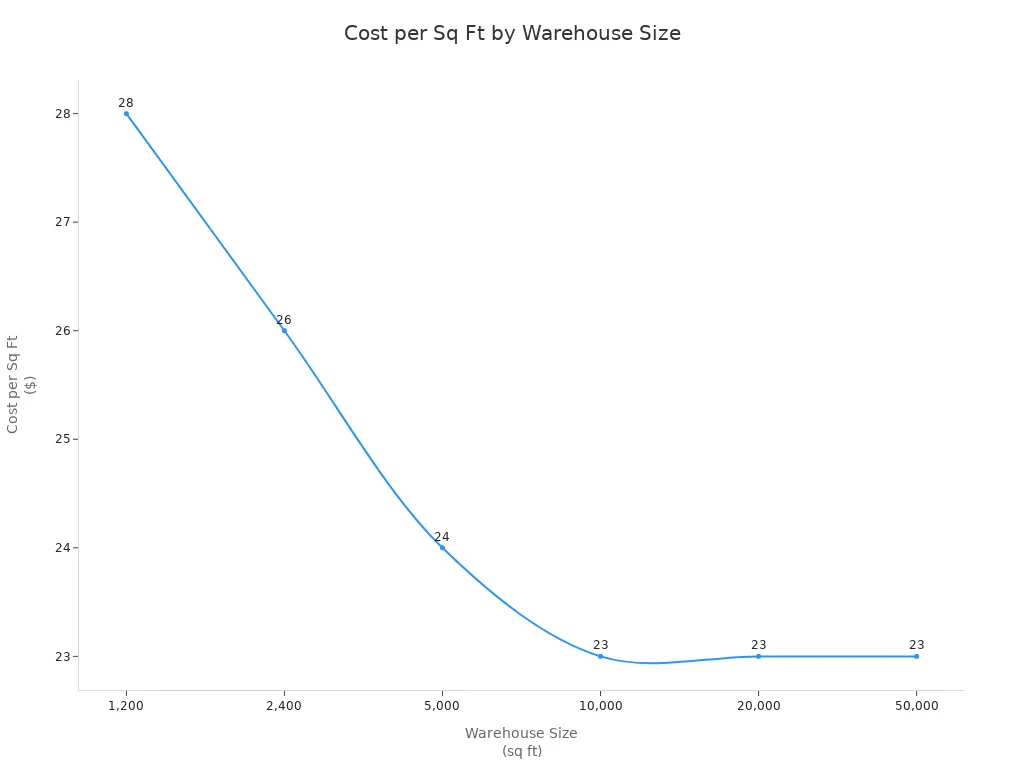
You can use this information to estimate your project budget. For example, a 1,200 square foot warehouse may cost $28 per square foot, while a 50,000 square foot warehouse drops to $23 per square foot.
Tip: Larger projects often qualify for bulk pricing on materials and labor, which helps you save money.
Example Project Costs
You can look at real-world examples to get a better idea of the total cost to build a steel warehouse. The table below shows several scenarios:
Scenario | Total Square Footage | Estimated Total Cost |
|---|---|---|
A | 20,000 Sq Ft | USD 22,000 |
B | Not specified | ~USD 26,000 |
C | Approx. 2,300 m² | ~USD 290,000 |
You should note that these prices vary based on location, materials, and design features. For instance, a basic 20,000 square foot warehouse may cost around $22,000, while a more complex project with advanced finishes and insulation can reach $290,000.
Qingdao Xinguangzheng Steel Structure Co., Ltd. stands out as a leader in the industry. The company has an annual production capacity of 150,000 tons, which means you can rely on them for large-scale projects. Their Grade I Professional Contracting Qualification for Steel Structure Engineering and ISO certifications show their strong reputation and commitment to quality.
You can trust Qingdao Xinguangzheng Steel Structure Co., Ltd. to deliver efficient, durable, and cost-effective steel warehouse solutions. Their expertise helps you optimize your project and achieve the best value for your investment.
Main Cost Components
Steel Frame and Structure
You will find that the steel frame and structure form the backbone of your warehouse. These elements usually account for 40% to 50% of the total construction cost. This includes columns, rafters, and bracing. You need to choose high-quality steel for strength and durability. The clear-span design from Qingdao Xinguangzheng Steel Structure Co., Ltd. gives you more usable space and flexibility.
Steel frame and structure: 40%–50% of total cost
Includes columns, rafters, bracing
Enclosure and Insulation
The enclosure and insulation protect your inventory and help control the building’s climate. The main cost drivers include insulation materials, enclosure system design, and compliance with energy standards.
Cost Driver | Description |
|---|---|
Insulation Materials | The choice of insulation materials impacts overall costs and energy efficiency. |
Enclosure System Design | Design choices for roofing and cladding affect material and labor costs. |
Compliance with Standards | Meeting energy efficiency standards can influence material selection and costs. |
You should also address condensation issues. Metal warehouses often face moisture problems due to temperature changes. Proper vapor barriers are necessary to keep your goods safe.
Foundation and Site Prep
Foundation and site preparation costs depend on soil conditions, warehouse size, grading, and drainage needs.
Factor | Impact on Costs |
|---|---|
Soil Conditions | Poor conditions may add $5,000–$50,000+ to site preparation costs. |
Warehouse Size | Larger warehouses require more materials and labor, increasing overall costs. |
Grading/Excavation | Costs depend on cut-and-fill balance and compaction testing requirements. |
Drainage Complexity | Additional costs arise from meeting local drainage requirements. |
You need to plan for these factors early to control the cost to build your warehouse.
Labor and Assembly
Labor and assembly make up a large part of your budget. These costs usually range from 30% to 50% of the total project expenses. Efficient modular prefabrication, like that offered by Qingdao Xinguangzheng Steel Structure Co., Ltd., can help you save time and money.
Labor and assembly: 30%–50% of total cost
Extras and Upgrades
You can customize your warehouse with extras and upgrades. These features add value but also increase costs.
Customization | Description | Cost |
|---|---|---|
Insulation | Basic to high-performance options | $1.50 – $5.00+ per sq. ft. |
Overhead Doors | Standard or upgraded insulated/glass doors | $1,500 – $10,000+ per door |
Windows | For natural light and ventilation | $300 – $1,500+ per window |
Roof Pitch | Steeper roof angles | +5% to +15% of kit price |
Wainscoting | Decorative metal panels | $5 – $10 per linear foot |
Overhangs/Gutters | Rainwater management systems | $8 – $20+ per linear foot |
Tip: Choose upgrades that match your operational needs and budget to get the best value.
Cost Factors
Size and Layout
The size and layout of your warehouse greatly influence the cost to build. Larger buildings require more steel and foundation work, but they often reduce the cost per square foot by spreading fixed expenses over more space. The layout also matters. Features like the number of dock doors, clear heights, and structural design choices affect material needs and labor intensity.
Cost Factor | Impact on Construction Costs |
|---|---|
Building Purpose | Determines design and structural needs, affecting material costs. |
Design Complexity | Complex designs increase engineering and labor expenses. |
Site Conditions | Location-specific factors can raise site prep costs. |
Layout Features | More dock doors and higher clearances increase material and labor costs. |
Structural Design | Heavier frames and extra bracing add to steel tonnage and foundation expenses. |
Labor Costs | Can reach up to 50% of total costs, influenced by complexity and finish level. |
Qingdao Xinguangzheng Steel Structure Co., Ltd. uses clear-span designs that eliminate internal columns. This design maximizes usable space and reduces steel requirements, lowering costs. Their modular prefabrication speeds up assembly, cutting labor time and expenses. Using BIM technology, they optimize layouts and detect issues early, saving you money and time.
Location and Site Conditions
Your warehouse’s location affects logistics, labor rates, and site preparation costs. Geography plays a key role. Sites near steel mills or ports reduce freight costs. Climate impacts structural requirements; extreme weather demands stronger materials. Soil and topography influence foundation complexity. Difficult access slows construction and raises labor hours. If your site lies in flood or earthquake zones, expect engineering costs to rise by 10-25%.
Site Condition | Impact on Cost |
|---|---|
Geography | Proximity to mills/ports lowers freight and logistics expenses. |
Climate | Harsh climates require heavier materials and stronger structures. |
Soils and Topography | Rocky or wet soils increase foundation and site prep costs. |
Access | Limited access raises labor hours and delays construction. |
Flood/Earthquake Zones | Additional engineering increases costs by 10-25%. |
Qingdao Xinguangzheng Steel Structure Co., Ltd. adapts designs to local conditions using BIM technology. This ensures compliance with regional codes and optimizes material use, helping control your overall cost to build.
Material Quality
Material quality directly affects your warehouse’s durability and long-term expenses. High-quality steel and finishes cost more upfront but reduce maintenance and repair needs. They improve safety and extend the building’s lifespan. Investing in premium materials means fewer disruptions and lower operational costs over time. Qingdao Xinguangzheng Steel Structure Co., Ltd. uses high-strength steel and sustainable materials that meet green building standards, ensuring your warehouse remains reliable and efficient for years.
Compliance and Permits
Obtaining permits and meeting regulations add to your project costs. Permit fees vary by size, complexity, and location. Typical costs include application, plan-check, and inspection fees, ranging from a few hundred to several thousand dollars. You might also pay for variances or conditional use permits.
Permit fees usually range from $500 to $2,000 for metal buildings.
Larger or more complex projects may face higher fees.
Delays in approvals can increase labor and financing costs.
Qingdao Xinguangzheng Steel Structure Co., Ltd. helps you navigate compliance using BIM technology to ensure your design meets all local codes. This reduces costly revisions and speeds up permit approvals, saving you time and money.
Tip: Early planning for permits and compliance avoids surprises and keeps your project on schedule.
2024-2026 Cost Trends
Market Price Changes
You will see significant changes in steel warehouse construction costs from 2024 to 2026. The market faces strong demand and supply chain pressures. Wide flange steel prices have increased sharply. Lead times for steel now stretch from 18 to 30 weeks. This means you may wait longer for materials and pay more for them.
Construction material prices rose by 6.2% in 2025, the largest jump since 2021.
Steel bars, plates, and structural shapes saw a 12.1% price increase.
Aluminum mill shapes surged by over 30%.
Domestic steel companies raised costs by 16%.
Structural steel prices climbed by $100 per ton since October.
Strong demand from sectors like data centers strains production capacity.
Labor shortages and rising material costs continue to impact project budgets.
Tariffs on steel, aluminum, and copper have also pushed prices higher. You should expect short-term price swings and tighter quote windows for materials in 2026. Metals like copper and aluminum may see the strongest upward price pressure. Steel prices have stabilized but remain unpredictable due to ongoing tariff pressures.
Tip: Secure your quotes early and plan for possible price changes when budgeting your project.
Regional Differences
Your location plays a big role in the final cost of your steel warehouse. Labor rates, energy costs, and local building codes all affect your budget. Coastal areas and regions with stricter codes often see costs that are 15–25% higher than average.
Region | Cost per m² | Notes |
|---|---|---|
North America | $160–$240 | Higher labor costs; strong code requirements |
Europe | $170–$250 | Energy costs, strict insulation/fire rules |
Asia | $120–$180 | Lower labor; logistics and quality vary |
Middle East | $140–$200 | Desert conditions, corrosion control |
Africa | $130–$190 | Import dependence; growing local capacity |
You should factor in these regional differences when planning your warehouse. Local expertise, like that offered by Qingdao Xinguangzheng Steel Structure Co., Ltd., helps you navigate these challenges and control costs.
Budgeting and Saving Tips
Planning Your Budget
You can build a strong budget for your steel warehouse by following a few key steps. Careful planning helps you avoid overspending and keeps your project on track. Here are some effective strategies:
Assess your storage needs early. This prevents you from paying for unused space.
Use vertical space wisely. Taller warehouses reduce land and building costs.
Add energy-saving features. These lower your utility bills over time.
Choose prefabricated metal structures. They speed up construction and cut costs.
Keep your design simple. Fewer features mean lower material and engineering expenses.
Compare quotes from different suppliers. Negotiate to get the best value.
Tip: A clear plan helps you avoid costly changes during construction.
Reducing Construction Costs
You can lower your construction costs without sacrificing quality. Smart choices at the start of your project make a big difference. Consider these practical steps:
Select pre-engineered metal building systems. These can reduce structural costs by up to 30%.
Increase your warehouse’s clear height. This boosts storage capacity by 25% with only a small cost increase.
Group loading docks together. This reduces site paving expenses.
Lock in material prices early. This protects your budget from steel price swings.
Plan for future automation. Install foundation supports now and add conveyor systems later.
Look for energy-efficiency incentives. Utility rebates can offset upfront costs.
Simplify your building’s shape. Avoid unnecessary features that drive up expenses.
Add sustainability features in phases. This matches upgrades to your cash flow.
Focus resilience investments on compliance and insurance savings.
Avoiding Hidden Expenses
Hidden costs can surprise you if you do not plan for them. You should watch for these common expenses:
Soft Cost Type | Estimated % of Budget | Core Requirement |
|---|---|---|
Engineering/Design | 5% – 8% | Code Compliance |
Permitting/Taxes | 3% – 10% | Legal Authorization |
Insurance Premiums | 1% – 2% | Asset Protection |
Site expenses can also impact your budget:
Site Expense | Estimated Cost | Budget Impact |
|---|---|---|
Concrete Foundation | $77,000–$140,000 | Major |
Site Grading | $10,000–$30,000 | Moderate |
Utility Hookups | $5,000–$25,000 | Variable |
Note: Review all soft and site costs with your contractor to avoid budget surprises.
Long-Term Value
Durability and Maintenance
You gain long-term value when you choose a steel warehouse. Steel structures resist corrosion, mold, fire, and pests. Anti-corrosion coatings protect your building in humid or harsh environments. This feature extends the lifespan of your warehouse and lowers maintenance costs. You spend less on repairs compared to wood or concrete buildings.
Annual maintenance for a 20,000 square foot steel facility averages $1.40 to $1.85 per square foot.
Steel’s durability means fewer disruptions and less downtime for your business.
Qingdao Xinguangzheng Steel Structure Co., Ltd. uses eco-friendly materials that further reduce maintenance needs. You benefit from a warehouse that stays strong and reliable year after year.
Energy Efficiency
You can save money on energy bills by using advanced energy-efficient features in your steel warehouse. Insulated roofs and walls regulate temperature and reduce heating and cooling costs. Efficient HVAC systems and cool roofing strategies lower indoor temperatures, cutting air conditioning expenses. Smart site orientation increases natural light and reduces energy consumption.
Feature | Impact on Operating Costs |
|---|---|
Insulated Roof | Regulates temperature, reducing energy costs |
Energy-Efficient Designs | Lowers environmental impact and operational expenses |
Efficient HVAC Systems | Reduces heating and cooling costs |
Cool Roofing Strategies | Can save up to 30 degrees in temperature, lowering AC costs |
Fully Insulated Walk Doors | Minimizes drafts and thermal transfer, improving HVAC efficiency |
Smart Site Orientation | Enhances natural light and reduces energy consumption |
Qingdao Xinguangzheng Steel Structure Co., Ltd. builds with recyclable steel and strong insulation. You support sustainable development and enjoy lower long-term operating costs.
Expansion Potential
You can plan for future growth with a steel warehouse. Modular design approaches allow easy modifications and expansions. Standardized connection systems ensure seamless integration of new components. Expandable end walls make future expansions cost-effective if you specify them during the initial design.
Planning for expansion early reduces costs and avoids extra engineering work.
Modular construction minimizes disruption to your operations.
Qingdao Xinguangzheng Steel Structure Co., Ltd. offers flexible solutions that adapt to your changing needs. You invest in a warehouse that grows with your business.
You now understand that steel warehouse construction costs usually range from $20 to $60 per square foot. Key factors include warehouse size, location, materials, design complexity, and labor. Careful planning and a clear budget help you avoid surprises. For the best results, consider innovative solutions and trusted providers like Qingdao Xinguangzheng Steel Structure Co., Ltd. To move forward:
Request a custom quote for your project.
Consult with warehouse experts for tailored advice.
This approach ensures your warehouse investment supports your business goals.
FAQ
How long does it take to build a steel warehouse?
You can expect most steel warehouses to be completed in 3 to 6 months. Modular prefabrication from Qingdao Xinguangzheng Steel Structure Co., Ltd. can reduce construction time by up to 30%.
What is included in a turnkey steel warehouse project?
A turnkey project usually covers design, materials, foundation, assembly, and basic finishes. You receive a ready-to-use warehouse without managing multiple contractors.
Can you customize the design of your steel warehouse?
Yes, you can fully customize your warehouse. You choose the size, layout, insulation, and extra features. Qingdao Xinguangzheng Steel Structure Co., Ltd. uses BIM technology to match your exact needs.
How do you ensure your warehouse meets local building codes?
You work with experienced engineers who use BIM technology to design for local codes. This process helps you avoid costly revisions and speeds up permit approvals.


